The five-minute trim that takes forty
You walk in for a quick cut. The waiting area looks busy but not crazy - a couple of guys on their phones, one in the chair getting a fade. “Shouldn’t be long,” you think. Forty minutes later, you’re still there, with no idea whether you’re next or whether the guy who walked in after you somehow got seated first. This is the moment most barbershops quietly lose a customer - not because the haircut was bad, but because the wait was blind.

The customer side: waiting without knowing
Nobody minds waiting ten or fifteen minutes for a good barber. What people mind is not knowing. Without a clear position in line or an honest estimate, every minute feels longer, and customers start doing the math on whether it’s worth staying. Some leave mid-wait. Others simply don’t come back next time, because “that place always makes you wait forever” sticks harder than “that place gave me a great fade.” For a first-time customer, an invisible queue is often the only impression the shop gets to make - and it’s the wrong one.
The barber side: a full shop isn’t always a win
From behind the chair, it looks different but no less broken. A packed waiting room can mean business is good, or it can mean the queue is out of control. A name list on a whiteboard, or just memory, falls apart the moment two barbers work at different speeds, a regular calls ahead, or someone steps out and comes back. The phone rings every ten minutes with the same question - “how much longer?” - pulling attention away from the person actually in the chair. No-shows quietly eat into the schedule, and walk-ins who peek in, see the crowd, and keep walking never even get counted as lost business.
Signs the wait is already costing you
- Customers checking their phones by the door, then leaving without a word.
- Barbers stopping mid-cut to answer “how long?” calls.
- No-shows nobody notices until a chair has sat empty for ten minutes.
- Walk-ins who glance in, see a full room, and keep walking.
Same root cause, two different headaches
Both problems trace back to the same gap: neither the customer nor the barber can see the queue in real time. A paper list or a shouted “you’re next” works fine at low volume. It breaks down exactly when a shop is busiest - which is exactly when losing a customer or mismanaging a chair costs the most.
What actually fixes it
The fix isn’t more staff or a bigger waiting room - it’s visibility. When customers can see their live position from their phone before they even arrive, they stop guessing and start planning. When barbers can see the full queue on a screen instead of a whiteboard, they stop firefighting and start running the shop.
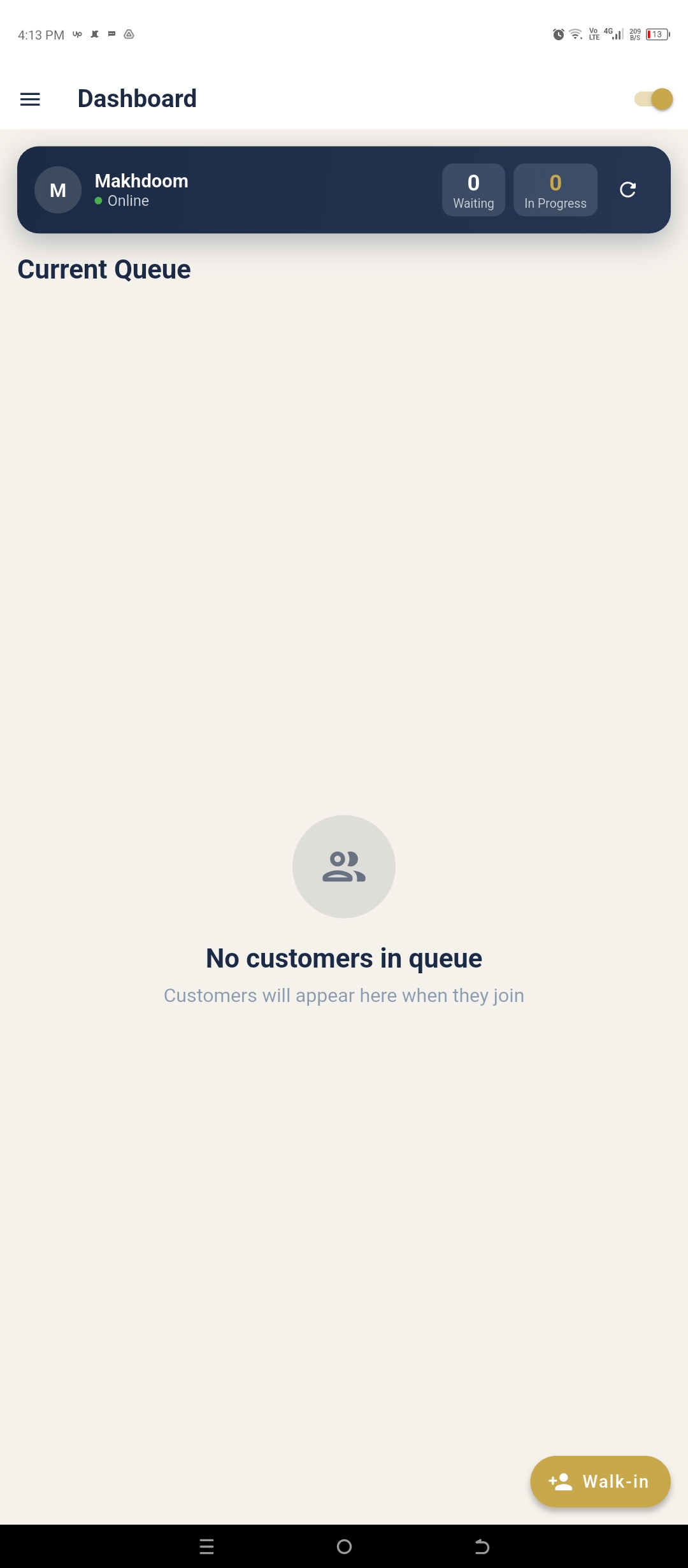
That’s the whole idea behind CutClock: one QR code turns a chaotic waiting room into a live queue everyone can actually see - no app download for customers, no DMs and Calls for barbers.